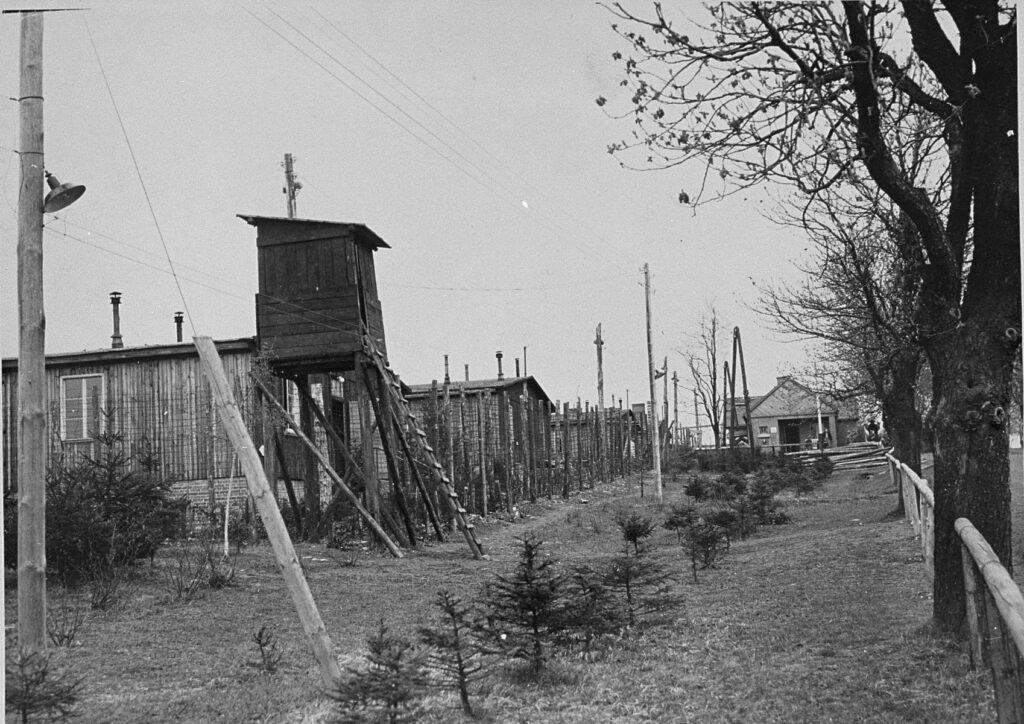
The Path of Remembrance – A place of suffering and remembrance
Remembrance
“The Path of Remembrance” attempts to bring together the separate sites of the former S III satellite camp as places of remembrance. Subcamp S III was a Nazi concentration camp that was established in 1944 as a branch of
In the summer of 1944, the SS began setting up several camp locations in order to use thousands of concentration camp prisoners for forced labor in the nearby Jonastal valley. Underground tunnels were dug into the mountain there in the strictest secrecy. Among other things, these were to be used as bomb-proof command bunkers for Hitler and the Nazi leadership. There were also plans to relocate production essential to the war effort.
The prisoners were spread over several locations:
Ohrdruf station was used to receive newly arriving prisoner transports and as a transshipment point for building materials. Here, too, prisoners had to work under extreme pressure, with temporary accommodation and work detachments in and around the Jonastal area, depending on the progress of the construction work.
The prisoners came from many European countries – including Poland, France, Russia, Hungary, the Netherlands and Germany. Most of them were political prisoners, Jews and prisoners of war. The
At the beginning of April 1945, with the advance of the US army, the SS began to clear the camps. Thousands of prisoners were sent on so-called
Today, the former satellite camp S III is a place of remembrance for the victims of forced labor and Nazi terror. The remains of the tunnels in Jonastal and the few surviving traces of the camp sites are a reminder to come to terms with the past and to remember. It is up to us to preserve the knowledge of this place and ensure that the victims are not forgotten.
“Never again.” – These words commit us all.