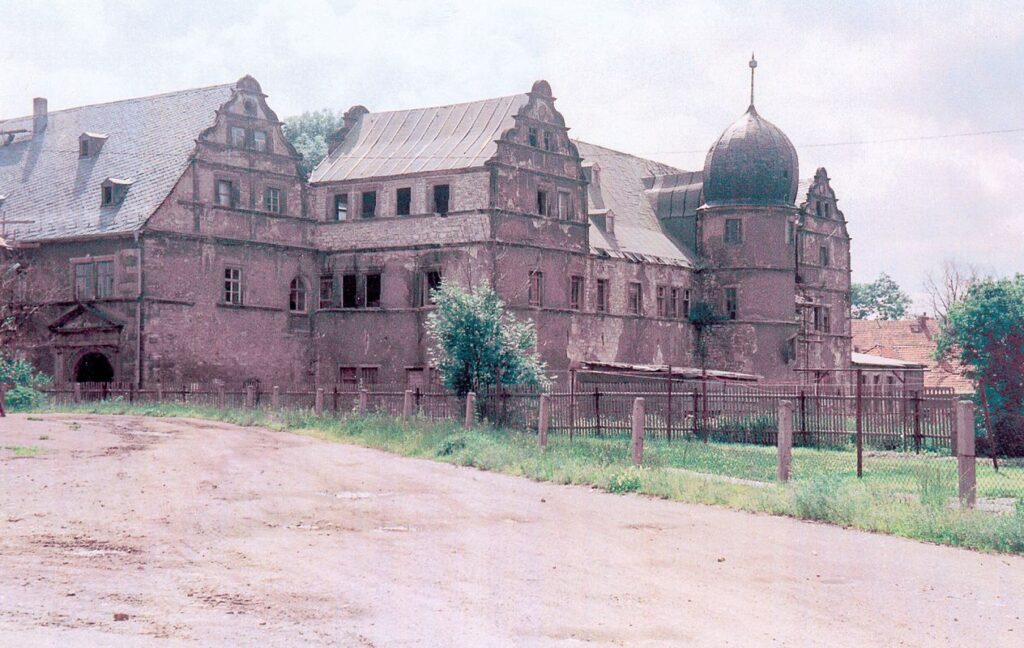
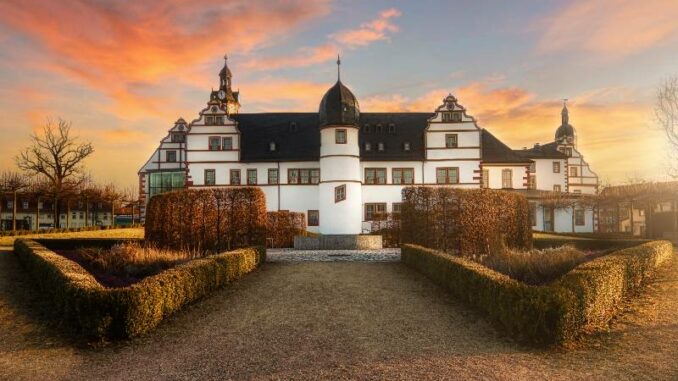
Ehrenstein Castle is not only a magnificent historical building in the heart of Ohrdruf, but also an important testimony to the town’s eventful history in the 20th century. During the Second World War, the castle was located in the immediate vicinity of the Ohrdruf military training area and the Ohrdruf subcamp (S III). Even though it was not used directly as a camp building, it was closely intertwined with the surrounding area, which was the scene of violence, forced labor and thousands of cases of suffering.
Today, Ehrenstein Castle is a central place of education and remembrance. The Ehrenstein Museum hosts workshops, guided tours, lectures and discussions with contemporary witnesses on the history of Nazi terror, the Ohrdruf subcamp and the resistance. These lively formats make the castle an important place of active remembrance: history is not only documented here, but also made tangible through discussions and artistic projects.
Events with relatives of survivors, such as Bart FM Droog, the nephew of Dutch prisoner Nikolaas Droog, are particularly important. The castle also serves as a starting and return point for commemorative events on the former camp grounds – for example on major anniversaries such as the 80th anniversary of the liberation in 2025, when the first group of figures on the “Path of Remembrance” was unveiled on the military training area.
The castle is therefore a suitable and meaningful location for works from the “Path of Remembrance” project. The works of art in the castle, which are shown as part of the exhibition on the military training area, refer to the groups of figures along the historical sites of the SIII camp complex. They make the connection between the town, the camp and the people tangible.
An exhibition in the castle offers space for quiet reflection and intensive exchange, protected from the weather and at the same time embedded in a building that is itself part of history. It builds a bridge from artistic remembrance in the urban space to concentrated discussion at a central historical location.
The works in Ehrenstein Castle make it clear that remembrance also needs places where history is told, experienced and passed on. Ehrenstein Castle is an ideal, dignified and lively place for this.