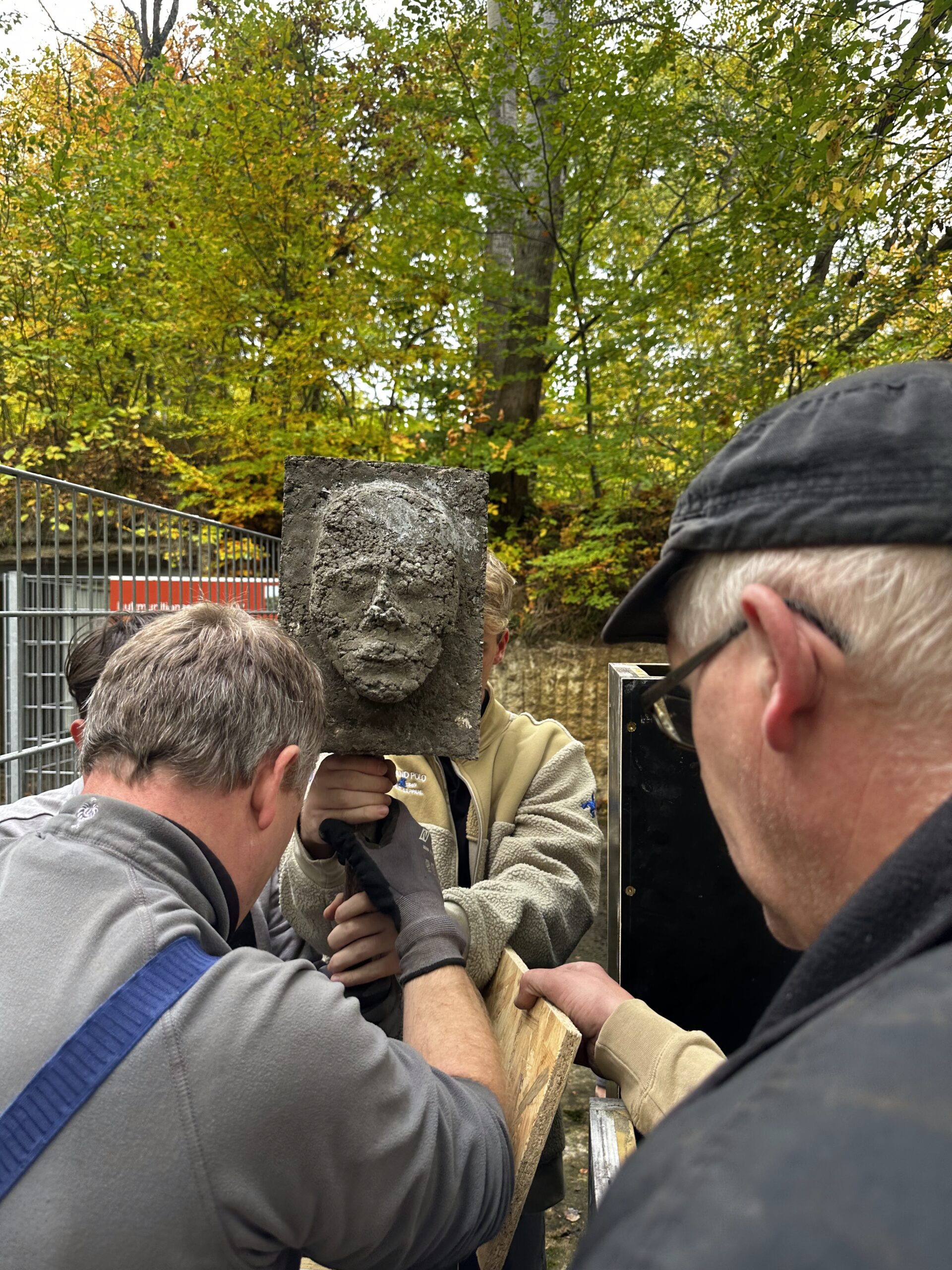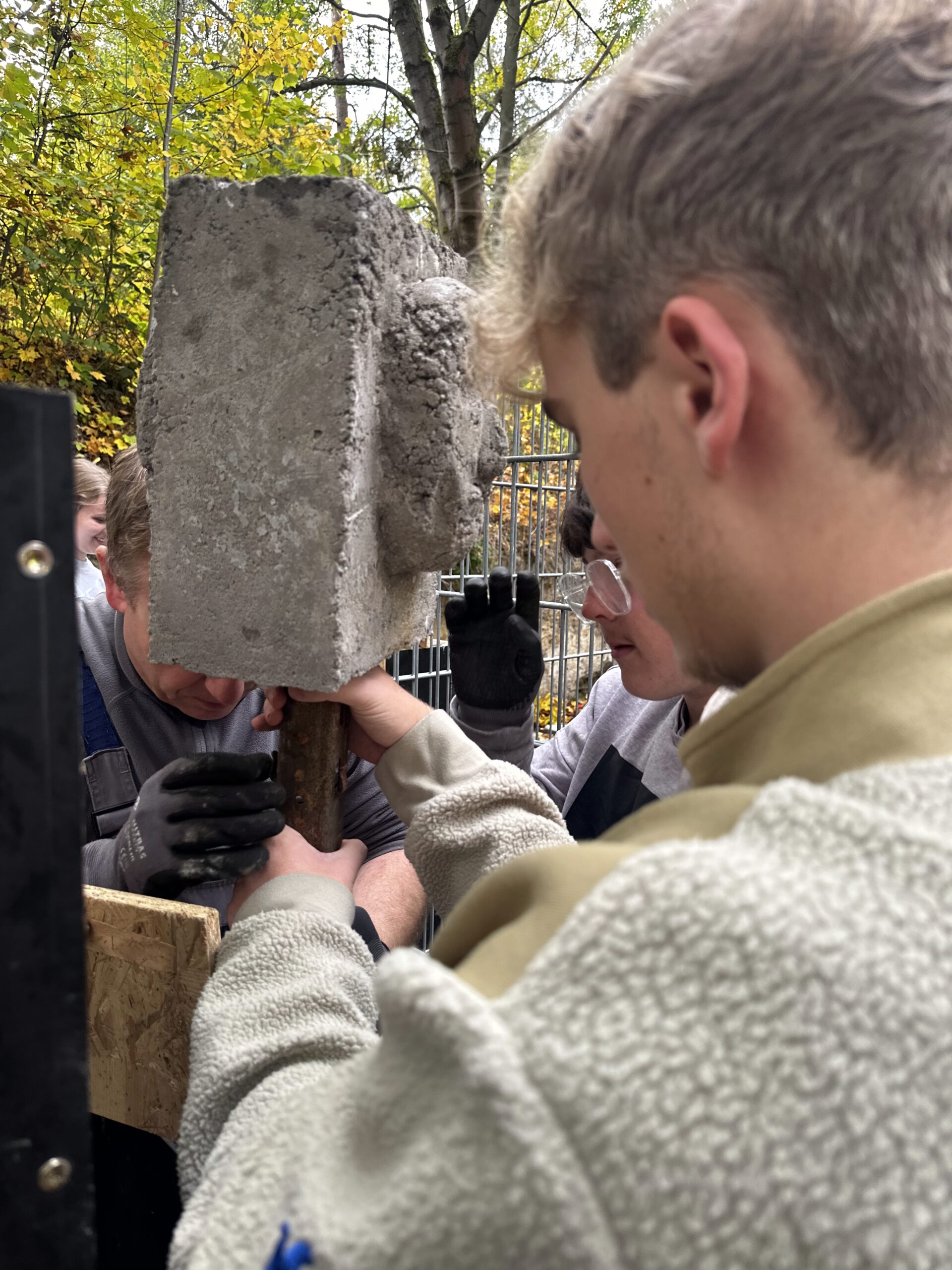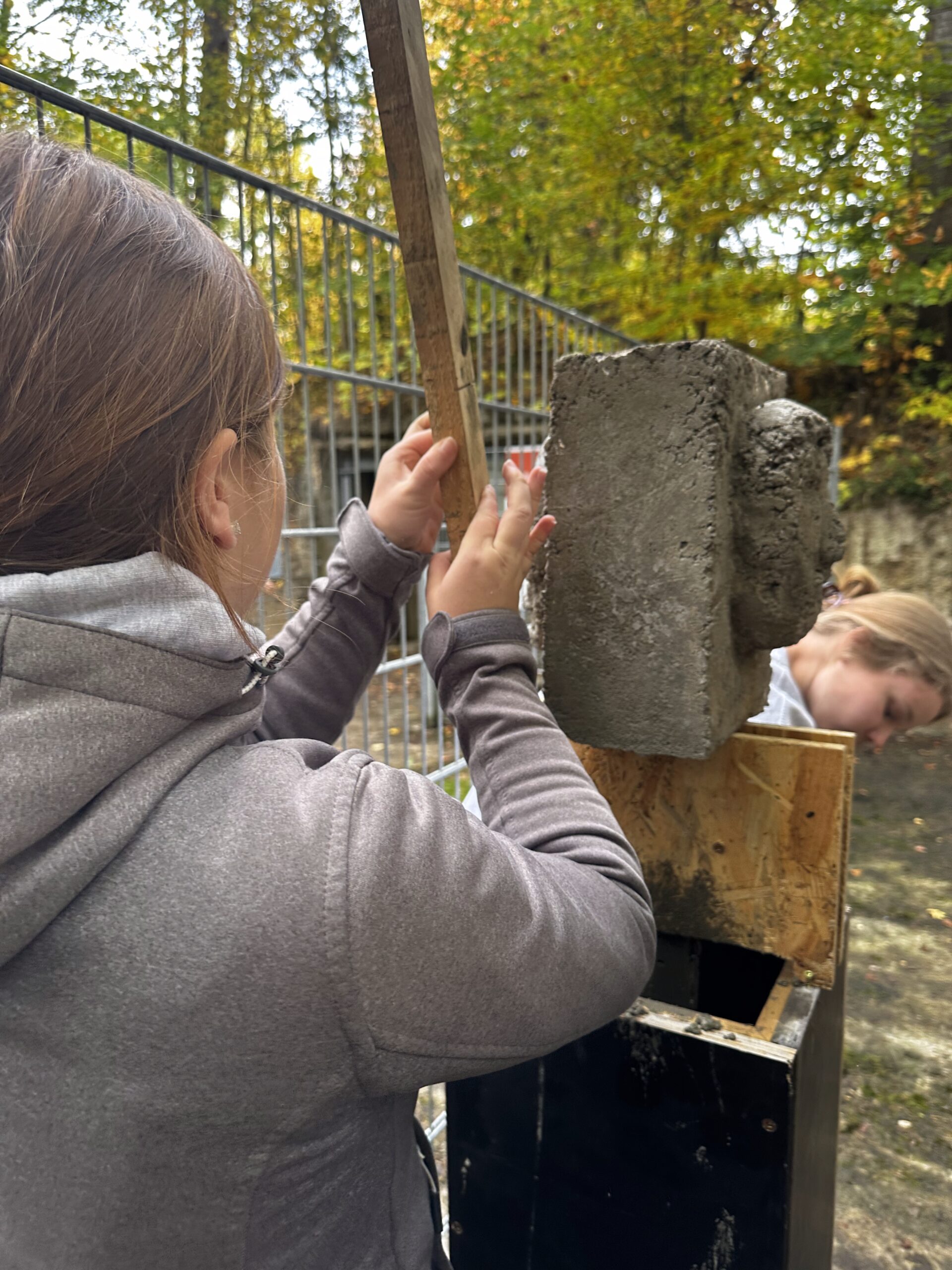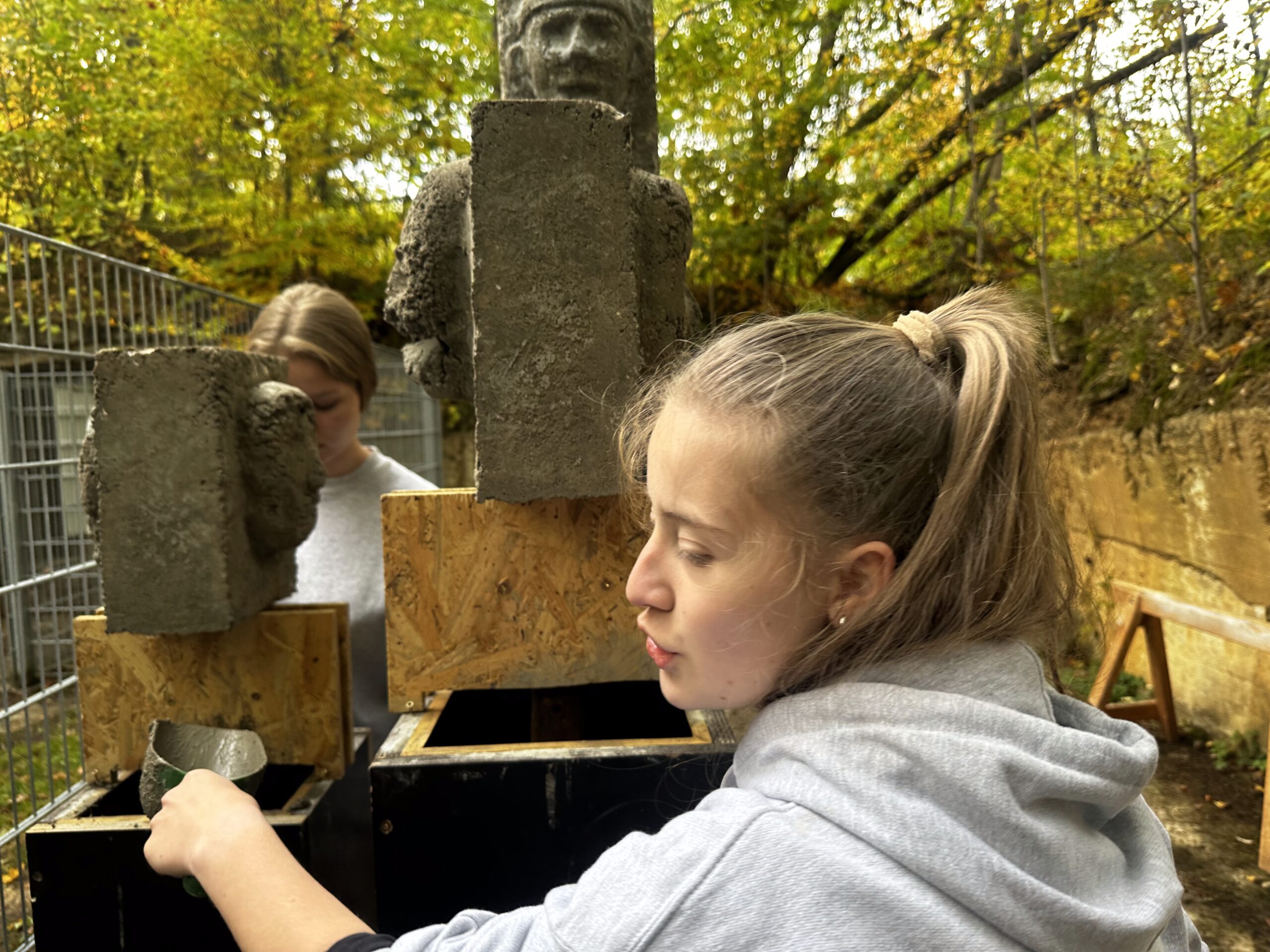
Viktor Vyshesłavsky was born on February 13, 1927 in Nikolayev, Ukraine
. He came from a Russian family, was of Orthodox faith and
worked as an electrical engineer. After the German occupation of Ukraine, he came to Suhl as a
forced laborer.
He was arrested as a teenager in Suhl for listening to foreign radio stations.
had eavesdropped – a political accusation in the Nazi state that often led to immediate
incarceration in a concentration camp. After his arrest, he was sent to the
Buchenwald concentration camp, where he was given the prisoner number 24 797. When he was registered at
, he was described as slim, 165 cm tall, with dark hair and
described as having a narrow face.
On November 27, 1944, he was transferred to subcamp S III / Ohrdruf and
registered there under prisoner number 106 762. This made him one of the
youngest prisoners to be used for forced labor in this camp.
Viktor Vyshesłavsky survived the death march back to Buchenwald.
The following memories are taken from a speech he gave at the commemorative event at
7. November 7, 2004 in Espenfeld on the 60th anniversary of the start of construction, recorded by Klaus-Peter
Schambach:
“In November 1944, I was transported from Buchenwald to Ohrdruf to Kommando S III.
This was the name of the Buchenwald sub-commando in which 3500 people were killed
in five months. During this time, the prisoners had to build a large
underground factory in a mountain. The living conditions were inhumane. For 5
months, we couldn’t wash ourselves in the camp. There was no bathroom. It was crawling with lice, the
typhus was raging. Sick people were taken to separate blocks where they simply lay naked on the
straw and died an agonizing death. The work was carried out from November to
April under the harshest climatic conditions in Thuringia. Hungry
people, scantily clad and barefoot, had to hoe the stony ground under the blows of the SS men’s sticks and pistons
. We had to work non-stop
all day until late in the evening. It was quite a long way from the camp to the work site. We had to travel to the work site on the
small train we had built. The prisoners traveled in small iron wagons. There had to be 24 men in
driving, sometimes 3-4 trolleys were knocked over and many prisoners broke their legs and
arms – some were killed instantly.
Many prisoners wanted to escape from this terrible place. But they were all caught again and
then hanged. One evening after a roll call, we had to be present at the hanging of a
death penalty. All our comrades died steadfastly. They all cursed fascism before
of the atrocities. Mountains of excavated corpses remained lying on the surface
. The evacuation of the camp began. Malnourished, exhausted people were chased to
Buchenwald and those who stayed behind were shot. It was a death march. Only an
insignificant number of us reached Buchenwald. I walked the last few kilometers with two sticks,
because I was very ill and had a large ulcer on my right leg. We reached
Buchenwald and my German comrades had saved me. How I survived – I don’t know myself
.
The surviving eyewitnesses
will never forget this gruesome story of the S III satellite camp! That was 60 years ago and I was just 17 years old at the time. That’s why
must fight decisively against fascism, Nazism and terrorism so that there will never again be war on this
globe! You must keep the peace! But the danger exists
just as it did in the past and we must all be vigilant at all times.”